Egypt's diverse landscapes, Egypt's diverse honeys
The concept of terroir, so common in wine and olive oil discussions, applies equally to honey. What the bees forage on, what grows where, what blooms when, all of this shapes the final character of the honey. Egypt's geography is more varied than many people expect.
From the humid Mediterranean coast at Alexandria to the Nile Delta's agricultural richness, from the Sinai's wild herbs to Upper Egypt's Sidr groves, each region produces honey with distinct characteristics. This platform's content reflects that regional diversity.
Alexandria and the Northern Coast
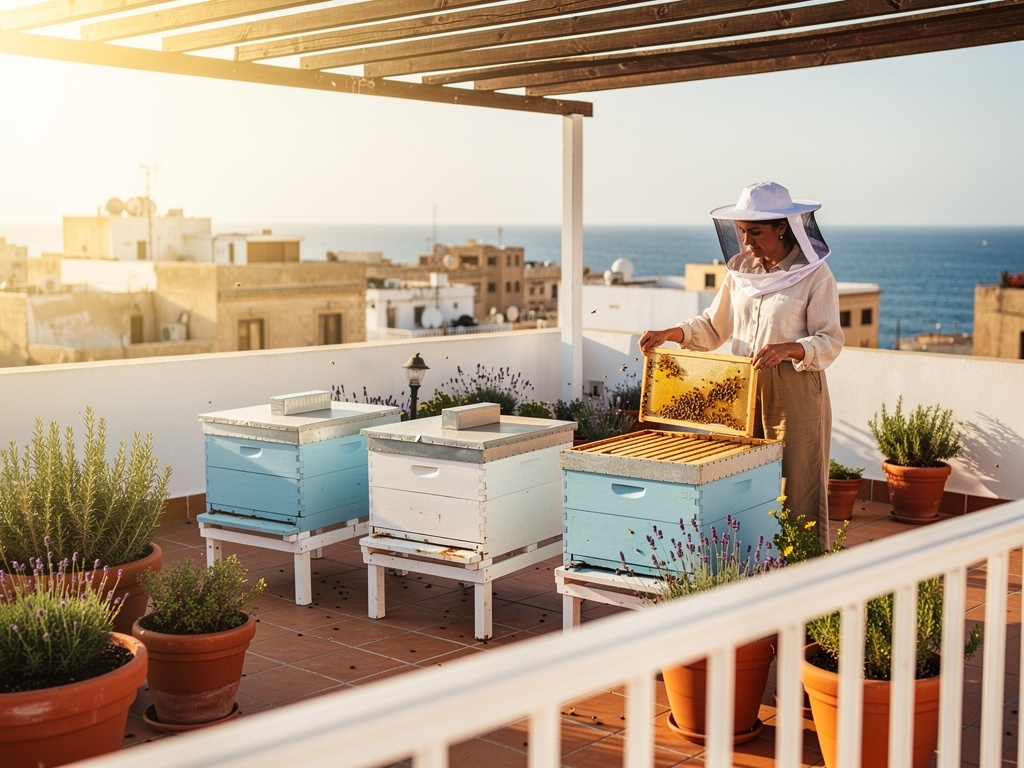
Alexandria's coastal climate moderates summer heat and extends flowering seasons. Citrus orchards, eucalyptus plantings, and coastal wildflowers all contribute to local honey character. The humidity is higher here than in the interior, which affects both forage timing and hive management practices.
This is the platform's primary base. Content about urban and peri-urban beekeeping, managing hives in moderate heat, and Mediterranean flora-sourced honey draws most directly from this region.
Delta Region
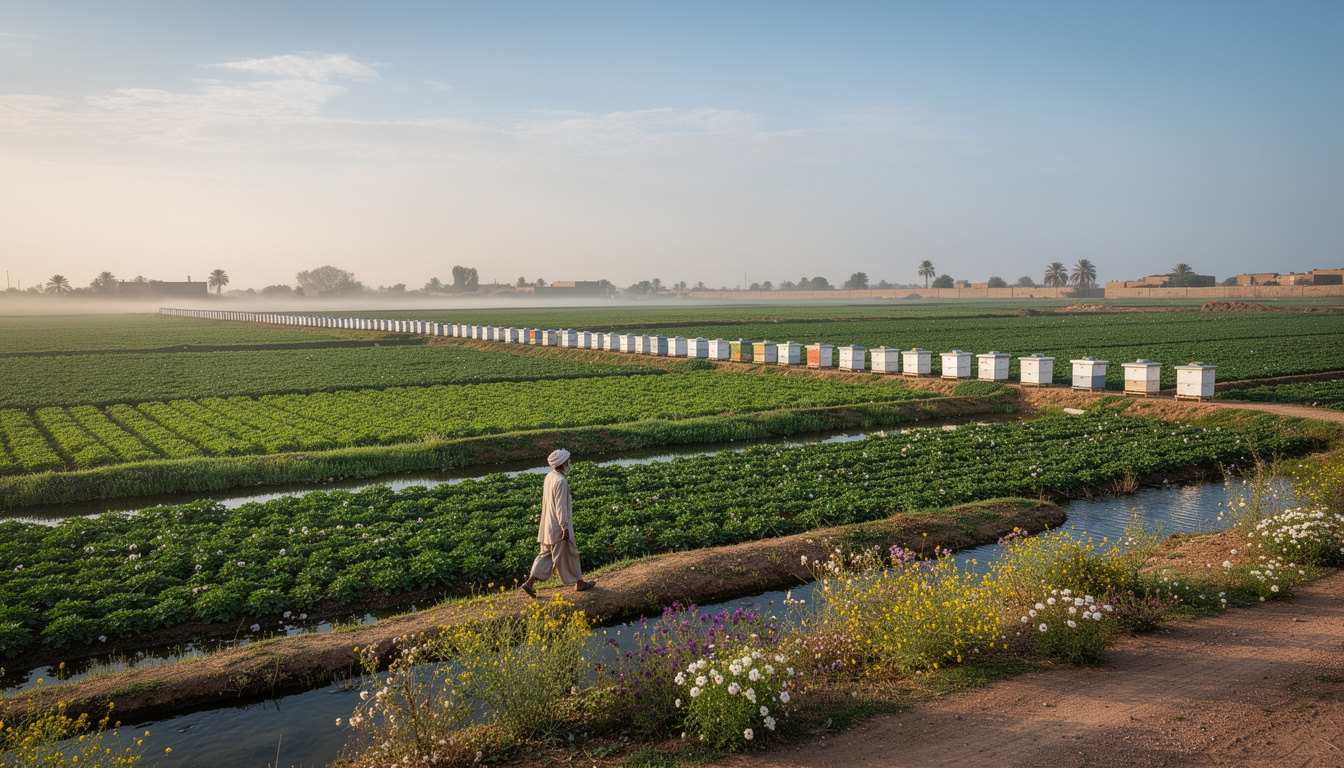
The Delta's agricultural intensity creates heavy spring and early summer nectar flows. Cotton, clover, and fruit orchards bloom in sequence, giving attentive beekeepers the opportunity to follow the flows or blend them. Delta honey tends toward lighter colors and mild flavors reflecting its agricultural sources.
Sinai Wild Flora
Sinai's mountainous interior and coastal strips support wild herb populations that produce some of Egypt's most distinctive monofloral honeys. Thyme and other aromatic plants create honeys with sharp, herbal character. Beekeeping here is more challenging due to terrain and temperature extremes.
Sinai honey commands attention for its unique flavor profile. Content covering this region focuses on understanding wild forage sources and the management adjustments needed for desert-edge conditions.
Nile Valley South
Upper Egypt's drier climate and distinct flora support some of Egypt's most prized honey varieties. Sidr trees (Ziziphus spina-christi) bloom in late summer and autumn, producing the dense amber honey that Egyptian beekeepers prize most highly. Date palms and acacia contribute to other seasonal flows.
Management in Upper Egypt's heat requires particular attention to water availability and ventilation. The content covering this region addresses these specific challenges alongside the distinctive honey character the region produces.
Moving hives to follow the blooms
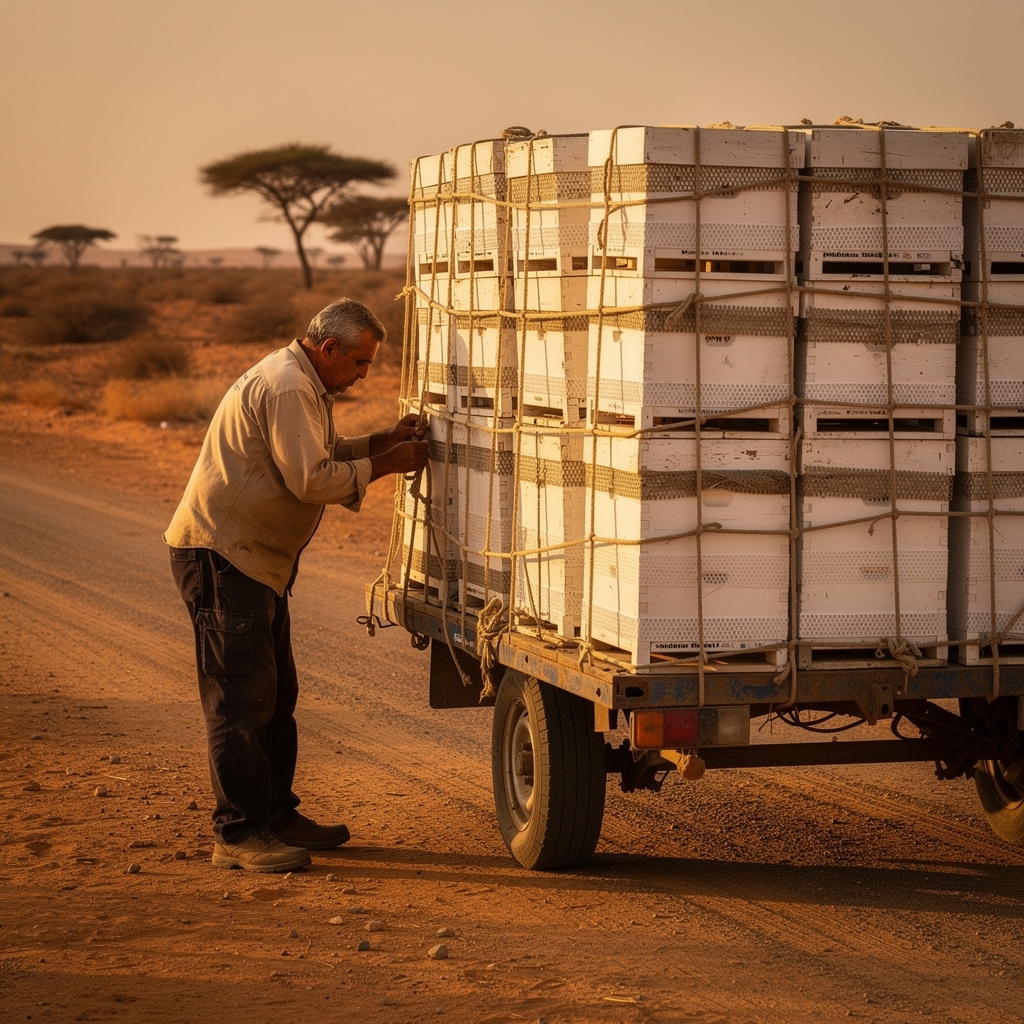
Egyptian beekeeping has a strong tradition of nomadic practice. Hives loaded onto flatbed trucks or donkey carts and moved to follow blooming cycles is still common across the country. Delta beekeepers might move north to south tracking cotton then clover then fruit, all within a single season.
Nomadic beekeeping increases honey production significantly but adds management complexity. Hives must be secured during transport. Bees can take time to orient to new locations. The beekeeper must time moves correctly relative to bloom and weather.
This platform covers nomadic practice as an educational topic. Understanding how and why beekeepers move their hives illuminates how Egyptian honey diversity comes to exist.