How content gets made here
Everything on this platform starts in the apiary. No content is written from secondary sources alone. The process from observation to published guidance follows a consistent path.
Seasonal apiary observation
Content begins with time at the hive. Observations are made across seasons at Egyptian apiaries in Alexandria and surrounding regions. Flight behavior, comb construction progress, population changes, and forage activity are all noted before any content is drafted.
This seasonal grounding means the content reflects actual Egyptian conditions rather than generalized global advice. What happens in a Nile Delta apiary in July is meaningfully different from what happens in March.
Cross-referencing with traditional knowledge
Egyptian beekeeping has oral and written traditions worth consulting. Older beekeepers in the Delta and Upper Egypt regions carry techniques and seasonal knowledge that does not appear in modern manuals. This platform makes an effort to record and represent that knowledge alongside contemporary methods.
Where traditional practice and modern understanding align, that alignment is noted. Where they diverge, both perspectives are presented honestly.
Plain-language drafting
Technical accuracy matters. So does readability. Content is drafted in plain language, with technical terms explained on first use. The goal is that someone who has never kept bees can follow the material without needing a background in apiculture.
Jargon is not avoided entirely, but every term that needs explanation gets one. Beekeeping has a useful vocabulary. Learning it is part of learning the craft.
Review for accuracy and honesty
Before publication, content is checked against known beekeeping science and regional practice. Claims that cannot be substantiated are removed or qualified. Opinions are labeled as such. The aim is to give readers information they can trust without needing to verify every sentence elsewhere.
This platform does not make commercial claims, offer certifications, or provide advice that substitutes for direct hive experience. The limits of educational content are stated clearly.
The tools behind the craft
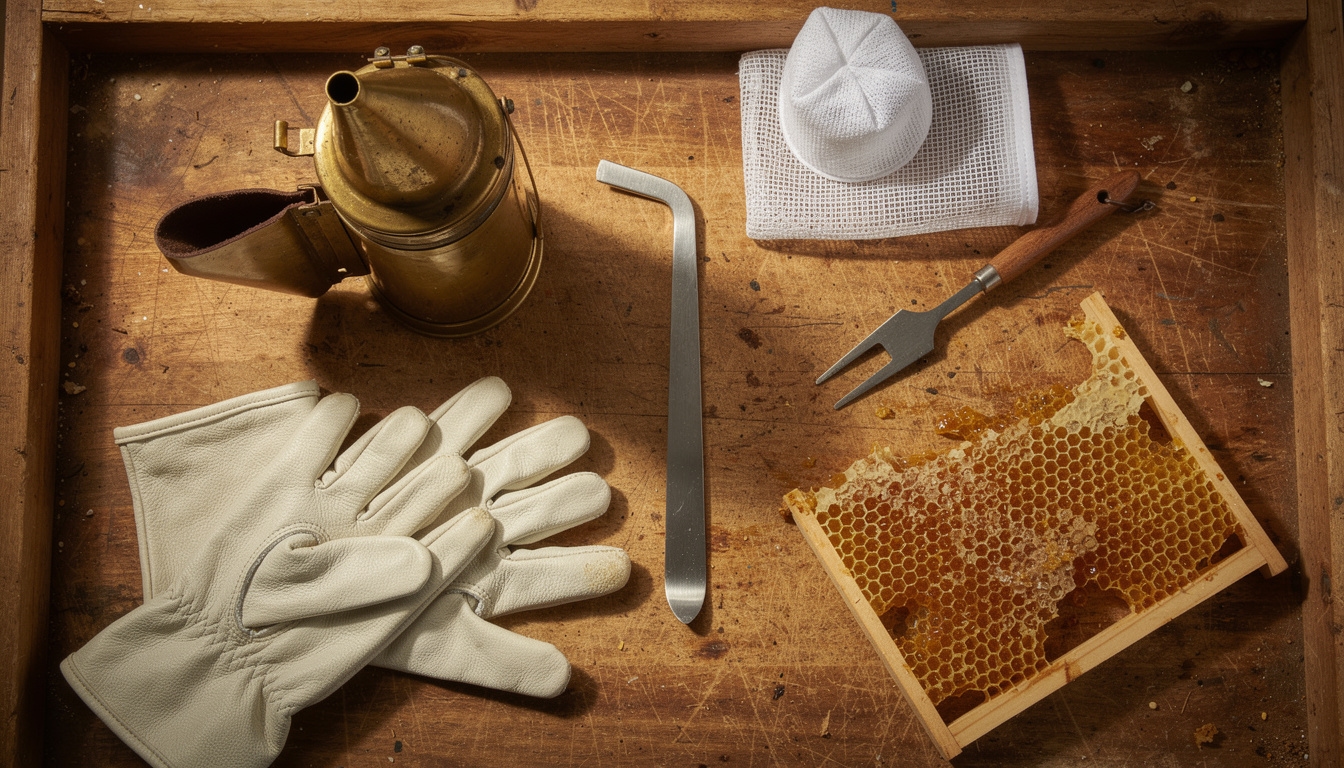
Understanding beekeeping equipment is part of understanding the craft. This platform covers the core tools used in Egyptian apiaries, why they exist, and how to use them safely.
Fueled with natural materials like dried citrus peel, cotton, or wood chips. Essential before opening any hive. Never skip it.
A flat metal bar for separating frames sealed with propolis. Bees seal everything. The hive tool is how you open it without damage.
Veil and gloves are non-negotiable for beginners. Full suits help in the heat. Confidence and experience change what you wear over time.
Spins capped frames to remove honey without destroying the comb. Manual extractors work for small operations. Reusable comb speeds up the next season's production.
Beyond honey: what the hive produces
Beeswax
Produced by worker bees from glands on their abdomen. Used to build comb. Harvested when capping wax is removed during extraction. Raw beeswax can be melted and filtered for use in candles, wood finishes, and skin preparations. Egyptian beeswax has historically been traded across the Mediterranean.
Propolis
A resinous material collected from tree buds and plant sources, mixed with wax. Bees use it to seal gaps, coat the interior of the hive, and reduce microbial exposure. It accumulates on frames and hive bodies. Collection requires a propolis trap or careful scraping. Raw propolis has a strong, complex aroma.
Pollen
Collected by forager bees on their hind legs in structures called corbiculae (pollen baskets). Pollen traps at the hive entrance catch a portion as bees enter. Fresh pollen is highly perishable and must be dried quickly. Egyptian spring pollen, particularly from citrus blooms, is notably aromatic.
Royal Jelly
Secreted by nurse bees from glands near the head. Fed to all larvae for the first few days and exclusively to queen larvae. Collection requires removal of queen cells and specialized equipment. It is labor-intensive and perishable. This platform covers royal jelly as part of colony biology rather than as a harvest target for beginners.